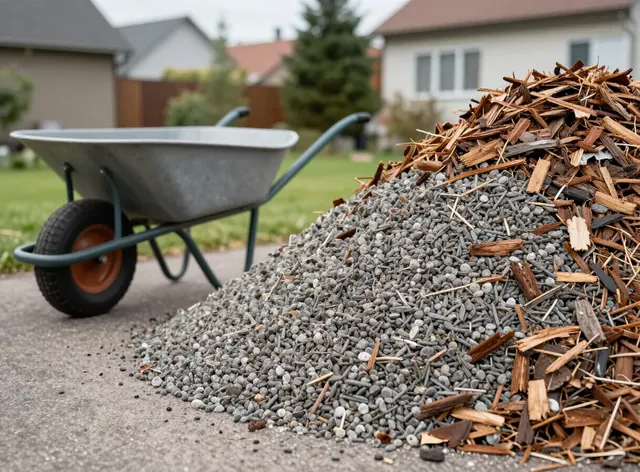
01 · Gravel, chippings, crushed stone & mulch
Aggregates
Volume and weight for gravel paths, chipping areas or mulch beds – including bulk bags, bagged goods and a compaction allowance.
Calculate aggregatesMaterial calculators for every garden project, from raised beds to paving and concrete work.
Volume and weight for gravel paths, chipping areas or mulch beds – including bulk bags and bagged quantities.
01 · Gravel, chippings, crushed stone & mulch
Volume and weight for gravel paths, chipping areas or mulch beds – including bulk bags, bagged goods and a compaction allowance.
Calculate aggregates
02 · Beds, backfill, containers
How much compost do you need for your bed or lawn build-up? Result in m³, litres and bags.
Calculate soil & substrate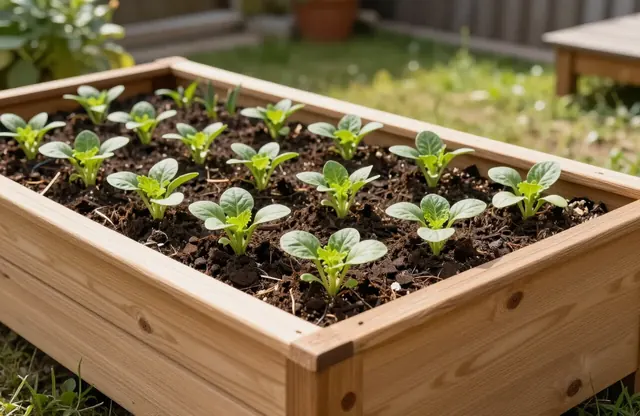
03 · Layers from the bottom up
The classic layered build-up: coarse prunings, coarse compost, fine compost and planting soil – split for your bed dimensions, with the bag count for the top layer.
Calculate raised bed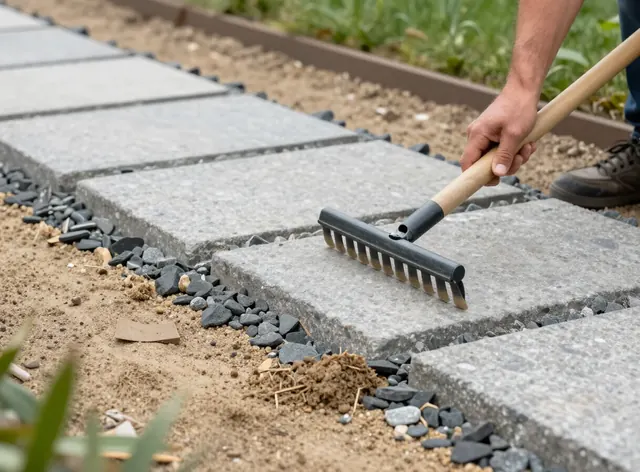
04 · Frost protection, crushed stone & bedding
Load-bearing build-up for a patio, driveway or garden path.
Calculate paving sub-base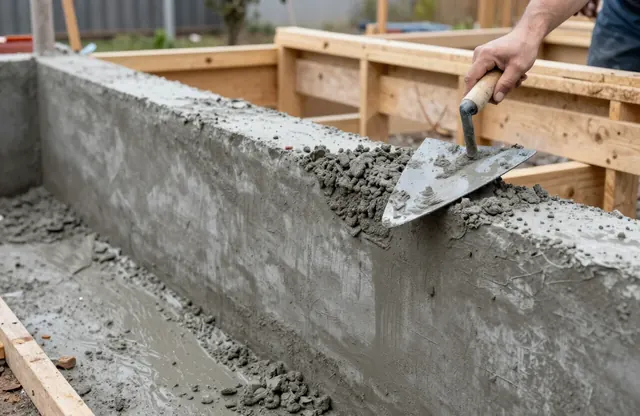
05 · Foundations, pad footings, wall heads
Concrete quantity for strip and pad foundations, converted into dry concrete bags.
Calculate concrete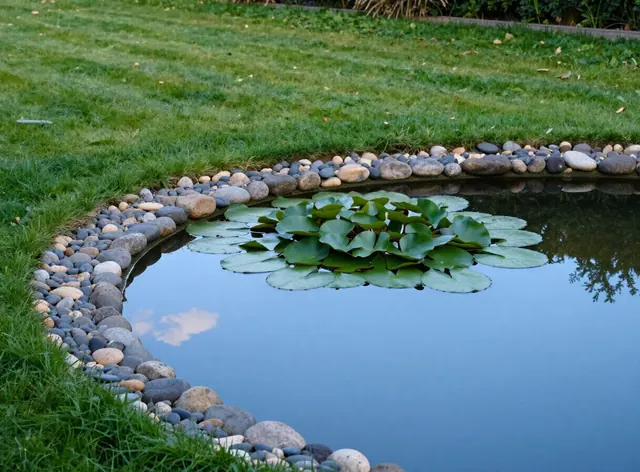
06 · Seed, turf & fertiliser
New lawn or overseeding – seed quantity as a range, turf requirement including offcut, and the soil needed for a fine seedbed.
Calculate lawn
07 · Water volume and liner size
Litres, liner size and turnover rate for a garden pond, natural pool or above-ground pool – rectangular, round or oval.
Calculate pond & poolKnow-how
Short notes from landscaping practice – for clean quantities and less rework.
Aggregates compact and moisture varies. Plan a small buffer instead of reordering.
Suppliers often sell by the tonne while you plan in m³. Density and grading decide the conversion.
Decorative gravel and chippings belong on fabric – it holds weeds back and saves maintenance later.
Coarse at the bottom, fine on top: branches, green waste, compost, soil. That creates warmth and a lasting nutrient supply.
Compact every sub-base layer individually. The chipping bedding stays loose so the slabs can settle.
Place and compact mixes promptly. Letting them stand too long weakens the strength.
Loosen the soil, remove stones and level it. Even sowing needs a flat, fine-crumb surface for good growth.
Length + 2× depth + edge allowance. An underlay protects against roots and sharp stones.
Check length, width and height again before ordering – especially with irregular beds.
Clarify access, a tipping spot and interim storage. Loose material needs space and often a wheelbarrow.
Common questions
Between 1.5 and 1.7 tonnes depending on grading. Gravel 2/8 sits at 1.5–1.6 t/m³, gravel 8/16 and 16/32 at 1.6–1.7 t/m³. That difference of roughly 13 % comes from the grading alone – which is why it is an input field here. Your supplier's figure for the actual batch remains binding.
Because bark mulch, compost and wood chips are sold by volume only. Their weight varies so much with moisture that a figure in tonnes says nothing. Calculators that still quote tonnes sometimes use 0.90 t/m³ – roughly three times the supplier's 0.31 t/m³.
For a decorative gravel area 4–5 cm is enough; walkable paths usually get 5–8 cm. Bark mulch sits at 3–5 cm in a perennial bed and 7–8 cm where it is meant to suppress weeds. These values come from trade portals and are marked unverified.
Tonnes divided by the density in t/m³ gives cubic metres. With gravel 8/16 at 1.6–1.7 t/m³, 5 tonnes is 2.9 to 3.1 m³. Because the density is a range, the result is a range too – anyone quoting a single figure is only pretending to be more precise.
Around 15 % for frost protection and base layers, because the material loses volume when compacted. For loose decorative areas 5–10 % is enough to cover unevenness and losses while tipping. The chipping bedding gets no allowance.
Usually not. A cubic metre of gravel weighs 1.5 to 1.7 tonnes, while a 750 kg trailer often carries only around 500 kg net. That is why the calculator also shows the number of loads needed at a 500 kg payload.
No. They are planning aids based on publicly available density figures and replace neither your supplier's data nor professional design work. For load-bearing or trafficked surfaces the binding rules are ZTV Wegebau, the FGSV code and DIN 18318; those paid documents were not evaluated.
Enter your dimensions and see volume, weight and bagged quantities for your garden project right away.
Calculate now